Nullam dignissim, ante scelerisque the is euismod fermentum odio sem semper the is erat, a feugiat leo urna eget eros. Duis Aenean a imperdiet risus.
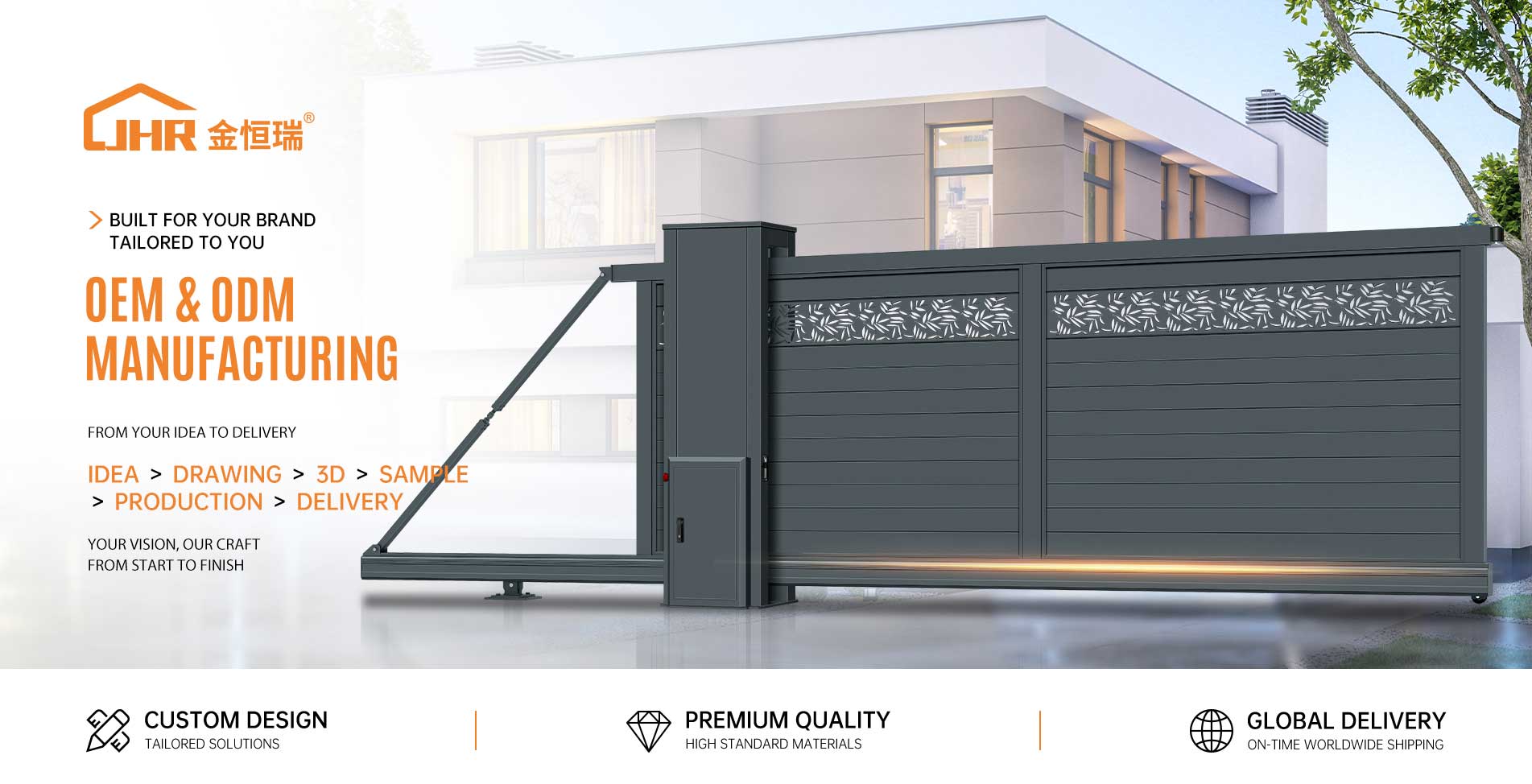
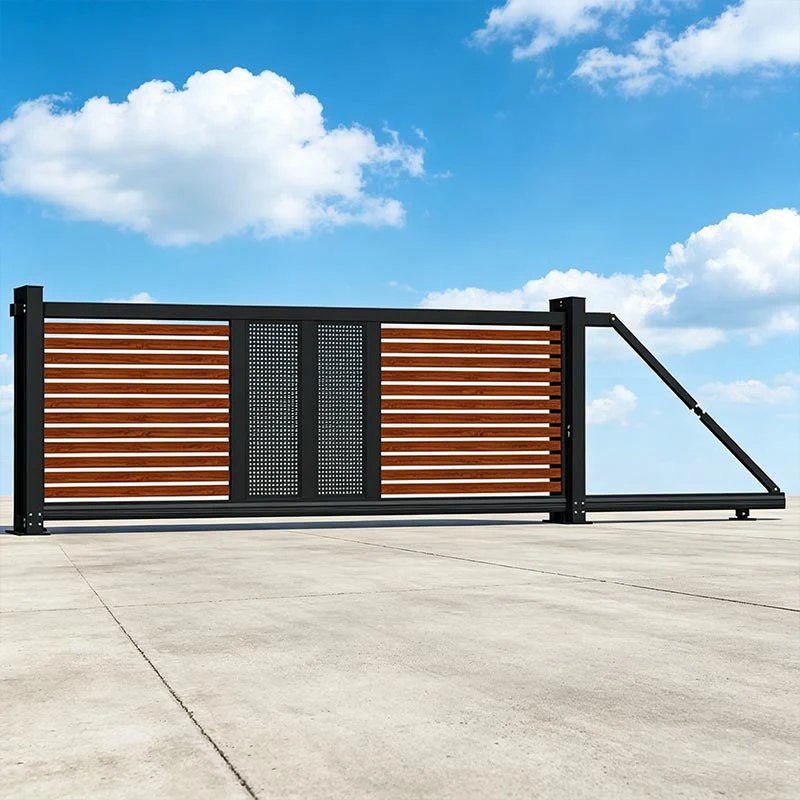
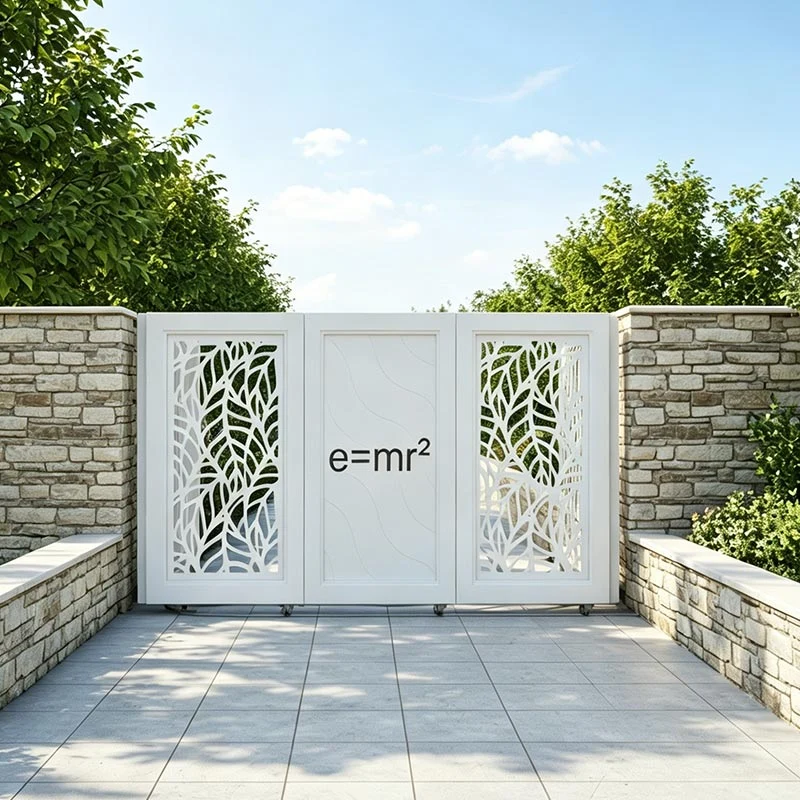
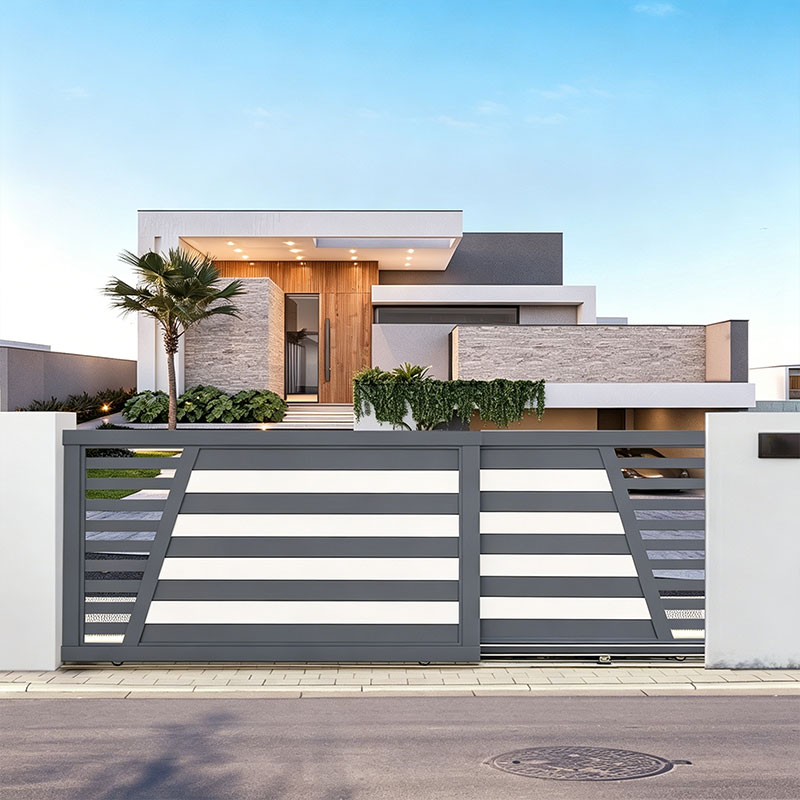
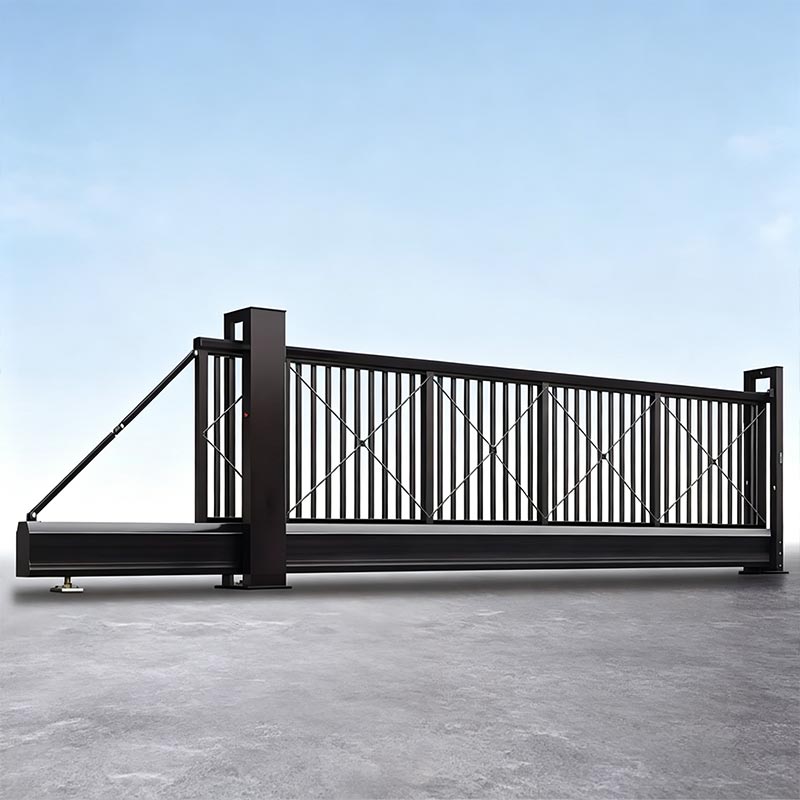
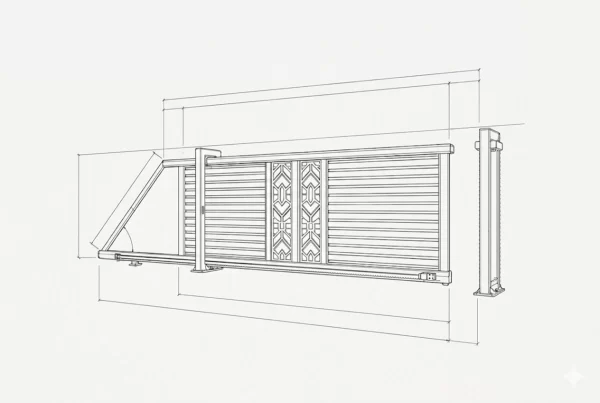
There's a reason more installers and property owners are moving away from tracked gates — and it's not just about the look. Ground rails collect debris, freeze over in cold climates, and eventually warp the alignment of the gate itself. The JHR Aluminum Cantilever Sliding Gate was built around a different idea: remove the track entirely, and most of the long-term problems disappear with it. The frame is structural-grade aluminum alloy throughout — not a steel core with an aluminum skin, but solid alloy from post to panel. Powder-coated finish goes on over that, and it doesn't peel, blister, or need refreshing the way painted steel does. In coastal areas or high-humidity environments, that distinction matters more than most spec sheets let on. It opens and closes on a cantilever mechanism: a set of roller carriages mounted to fixed posts carry the gate's weight entirely above ground. No ground contact means no seasonal heaving, no accumulated grit jamming the movement, and no trip hazard across the driveway. The gate itself moves quietly enough that most people don't register it until it's already open. Available in manual push or motorized configurations. Custom-built to your opening dimensions. Fifteen years from installation, it should still operate the same way it did on day one.
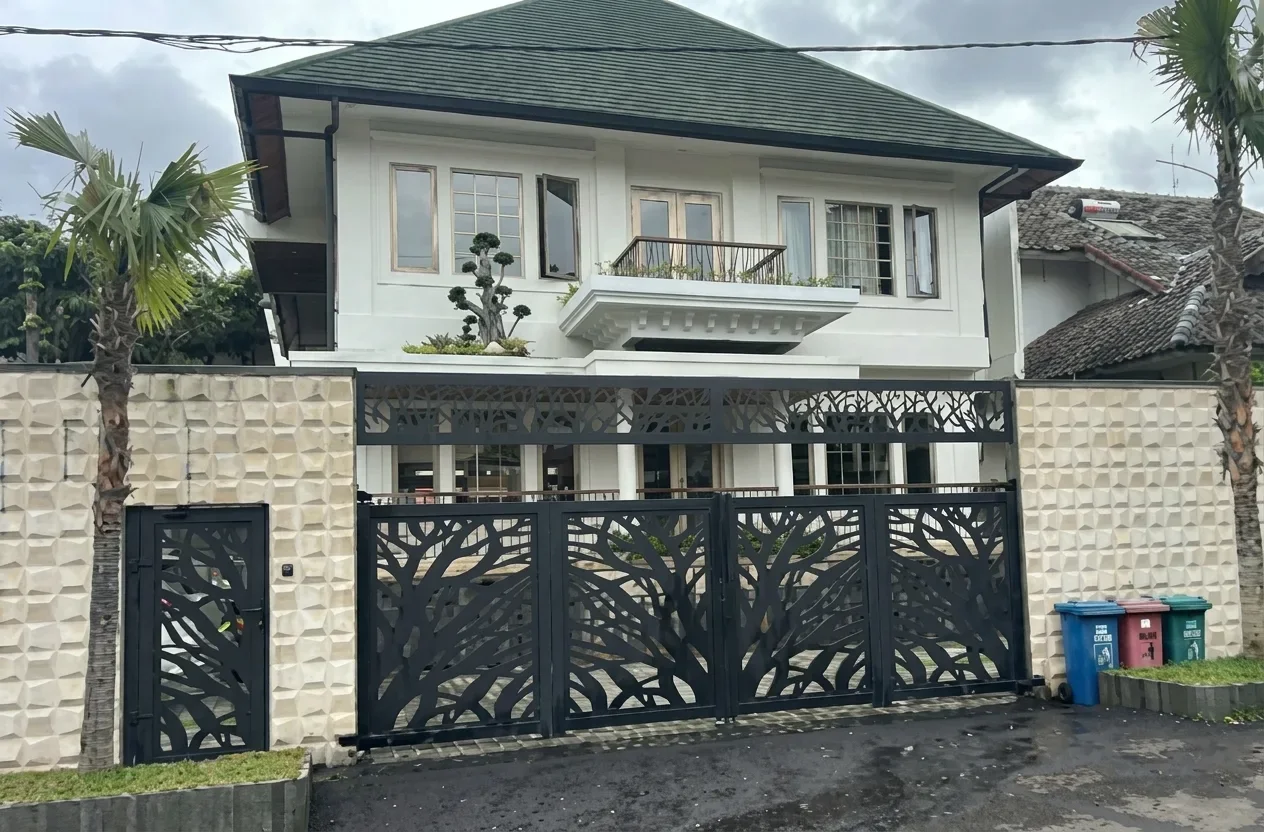
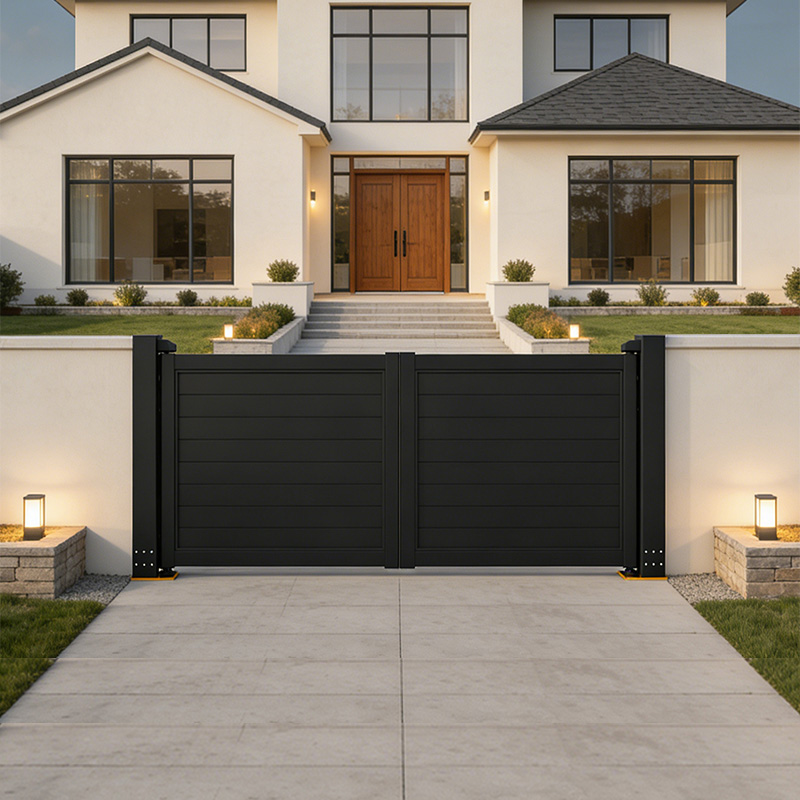
The double swing gate is one of those formats that property owners recognize before they know what to call it — two leaves, central meet point, opens on hinges. It reads as an entrance rather than a barrier, which is part of why it stays the dominant choice for residential villas and estate driveways even as sliding and folding options have multiplied. What JHR changed in this version is the material. Traditional double swing gates — wrought iron, painted steel, timber — share a common maintenance arc: they look good at installation, hold up for a few years, then start showing the cost of the hinge-load and weather exposure at the joints and surfaces. The frame on this gate is 6063-T5 aluminum alloy throughout. It doesn't rust, doesn't warp from UV cycling, and comes in at roughly 40% lighter than a comparable steel structure. On a swing gate specifically, that weight difference has a longer-term consequence than people usually account for up front. Available from 2.0 m to 8.0 m per leaf, in multiple infill styles, ships flat. Manual or motorized.
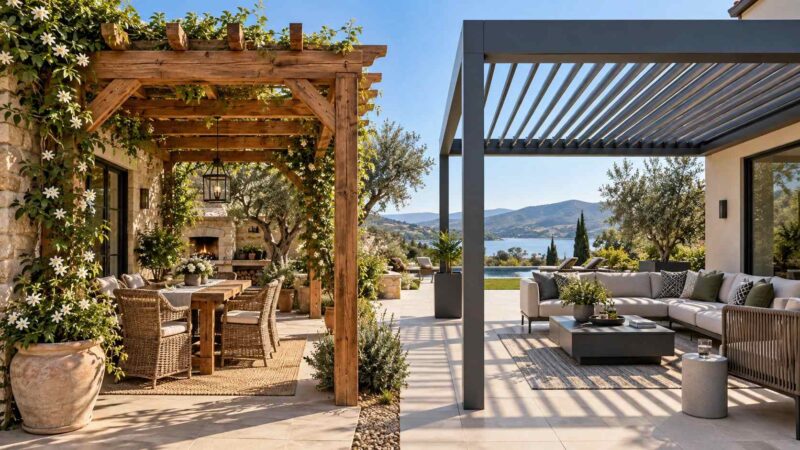
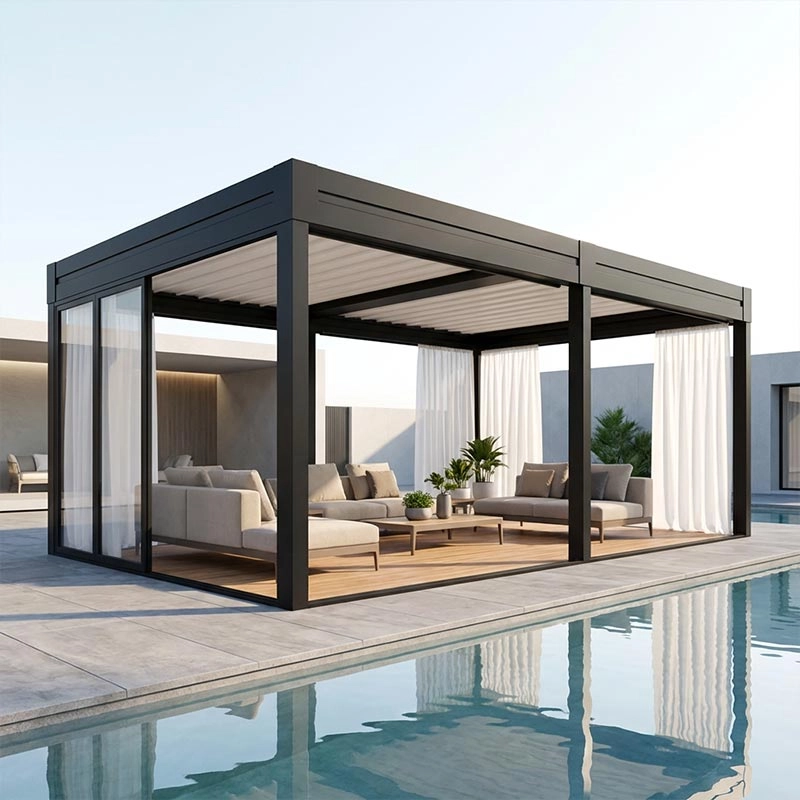
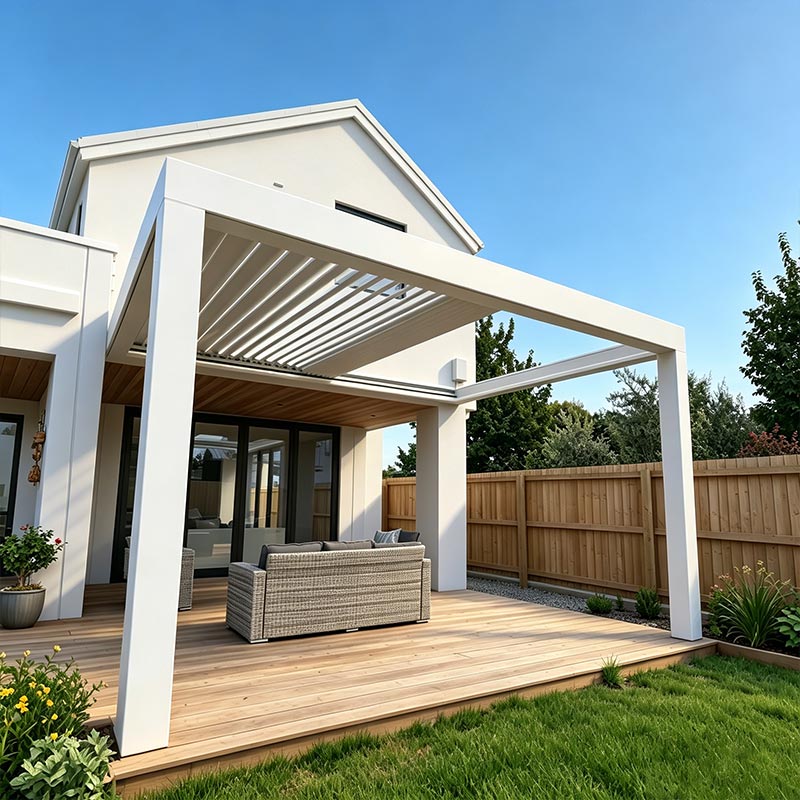
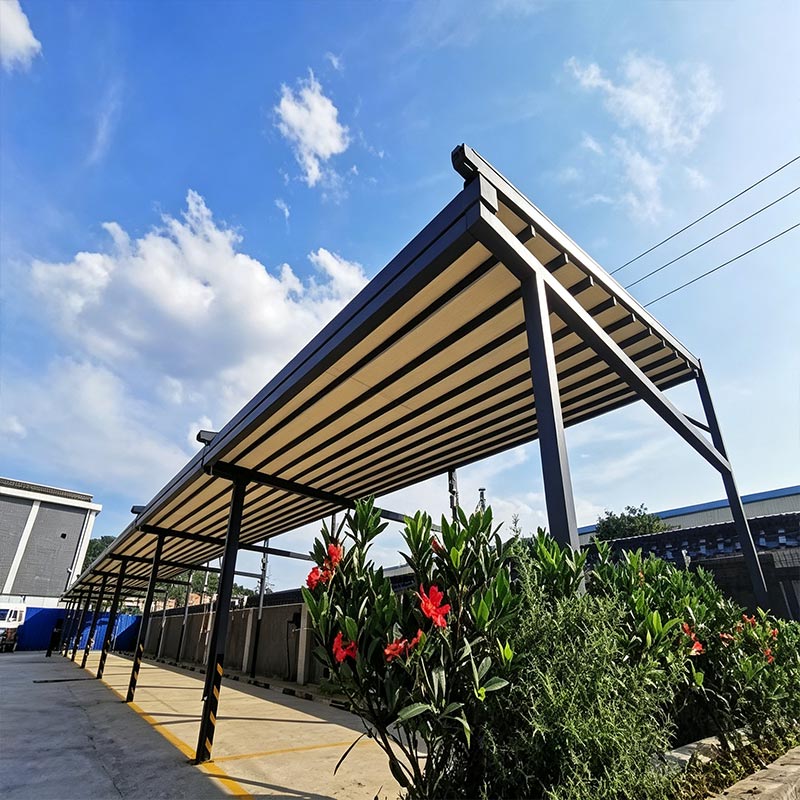
Every fixed outdoor structure makes a permanent decision about light and airflow. A solid roof solves the rain problem and the sun problem, but it also solves the fresh-air problem and the open-sky problem — permanently, in all weather. An open lattice pergola provides partial shade at certain sun angles and zero rain protection. Neither one adapts to what the space actually needs at a given moment. The JHR Motorized Louvered Aluminum Pergola has a roof that rotates. The blades sit on pivot axes driven by a quiet tubular motor — 0 degrees puts the blades edge-on to the sky for full light and maximum ventilation; 135 degrees overlaps the blades and the roof is watertight, with rain draining to integrated gutter channels in the perimeter beams. Any position between those two handles a different combination of shade, light, and airflow. The adjustment takes a few seconds from a wall switch, a remote handset, or a smartphone app. The entire structure is 6063-T5 aluminum alloy — columns, beams, and louver blades — powder-coated in any RAL color. Column spacing, roof span, and height are specified per project. Accessories include integrated LED lighting, motorized side screens, rain sensors for automatic louver closure, and smart home integration through Tuya, Alexa, and Google Home. Standard modular widths from 3.0 m to 8.0 m; depths from 2.5 m to 6.0 m; column heights from 2.4 m to 3.5 m.
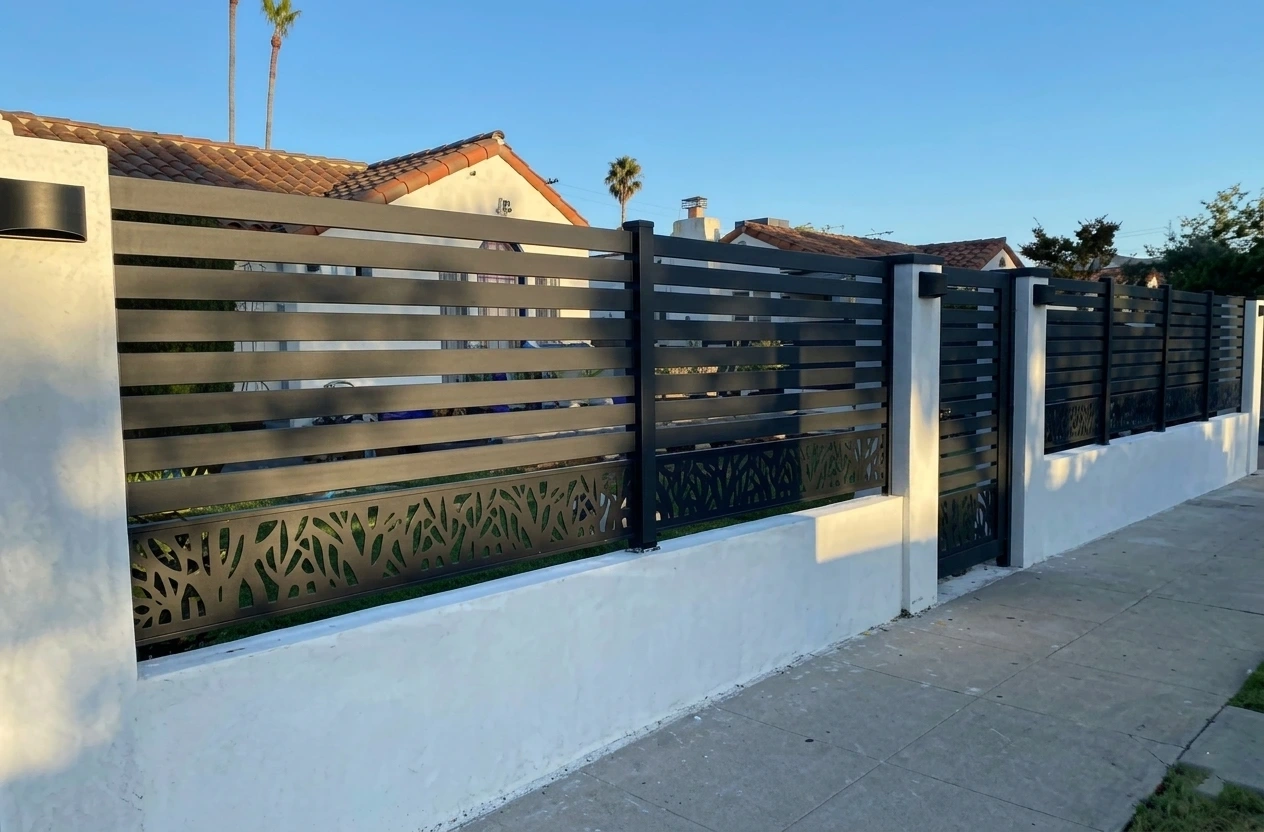
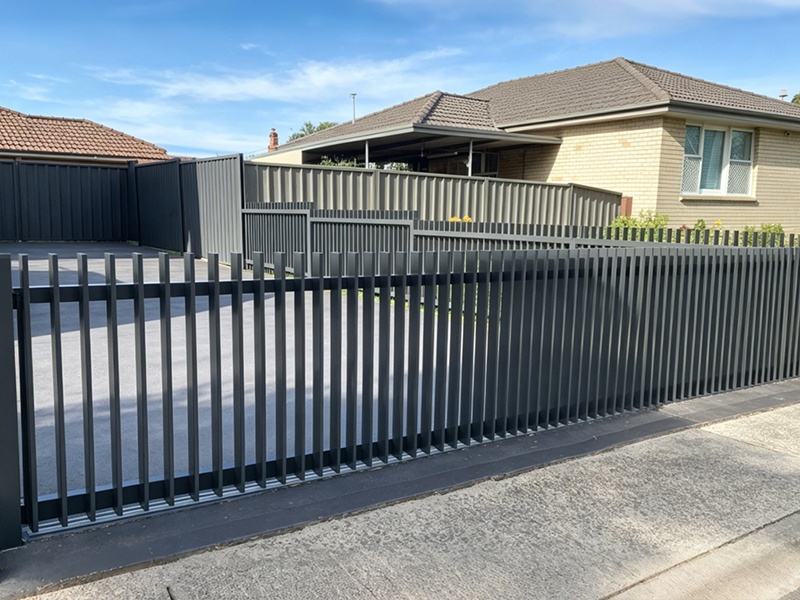
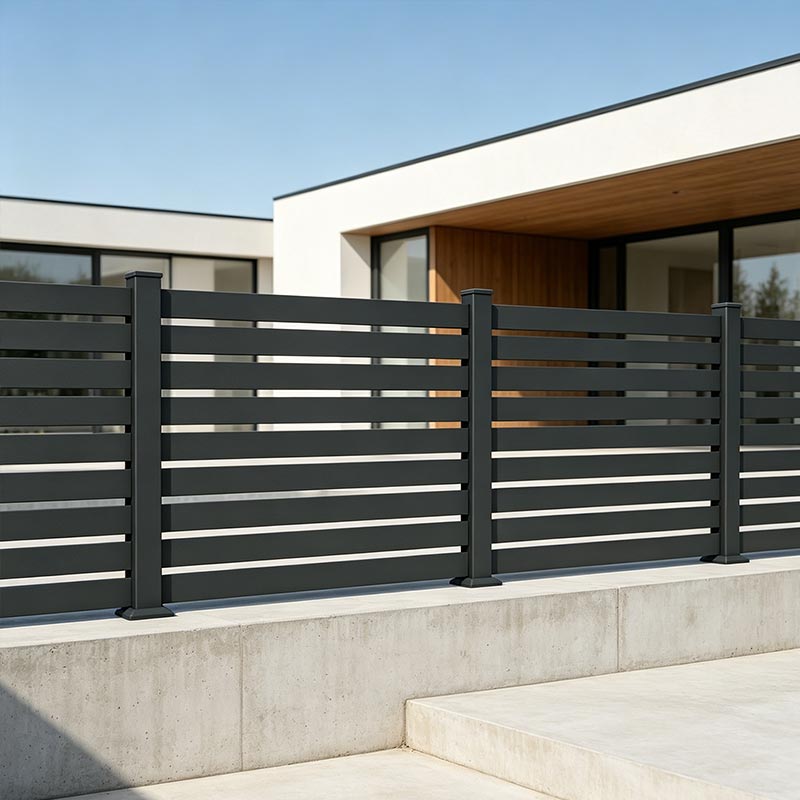
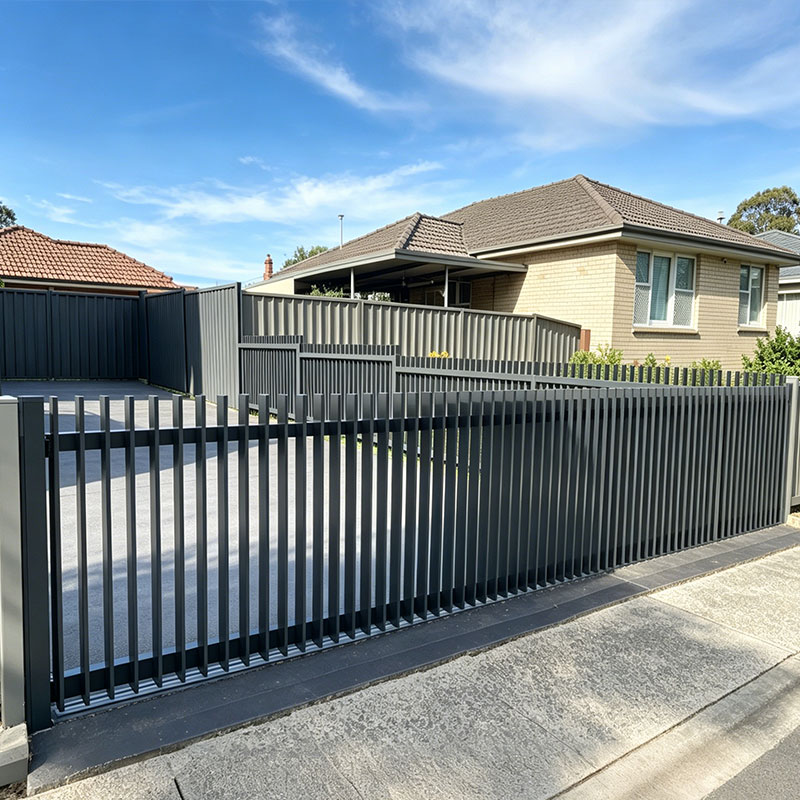
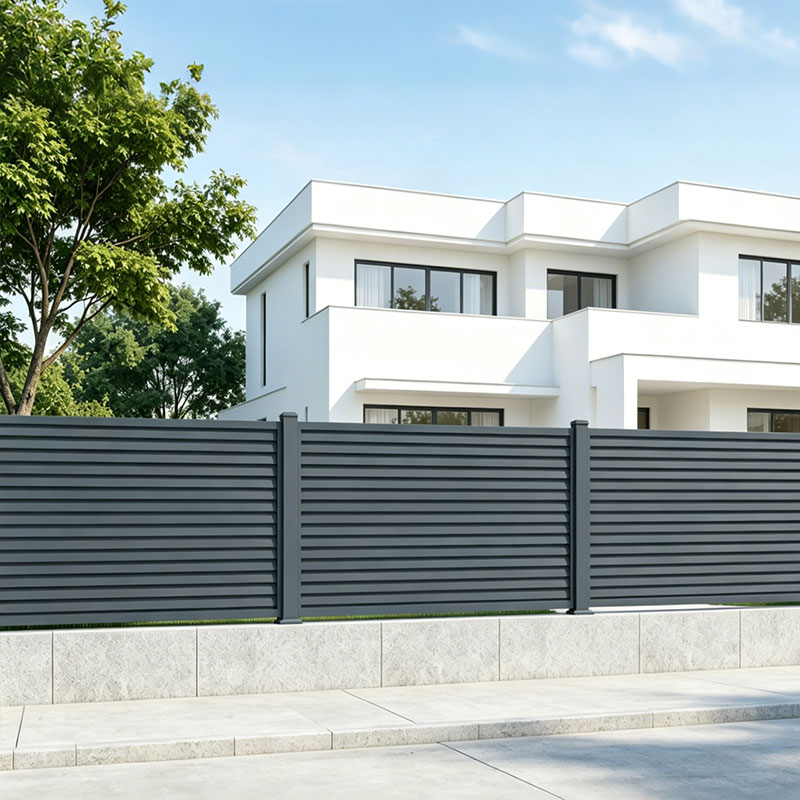
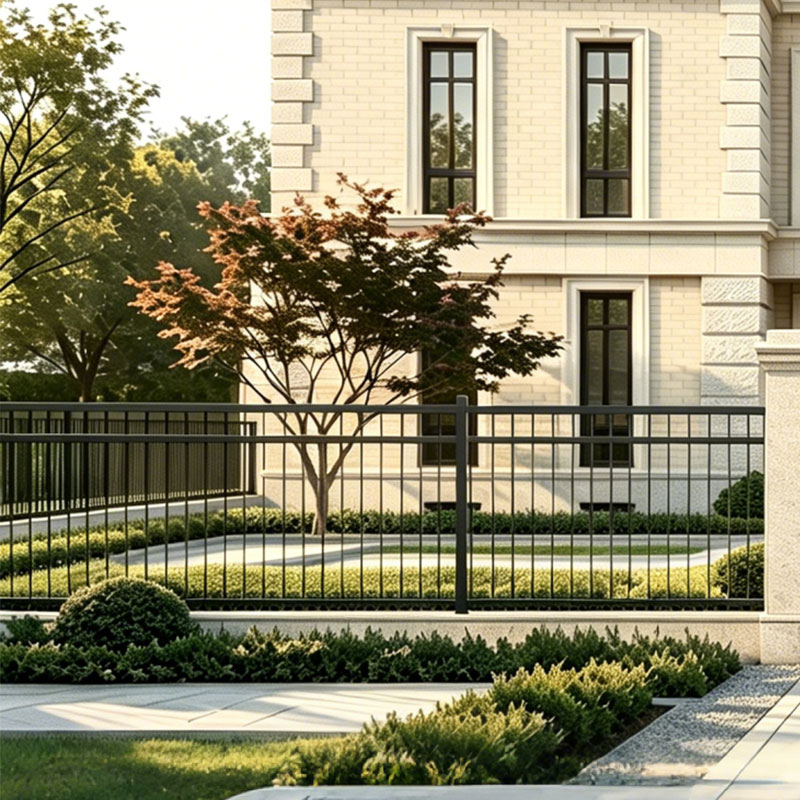
Most fence decisions don't start with material — they start with the problem the previous fence caused. The timber one warped along the bottom rail after two wet seasons and needed repainting before it had been up five years. The steel one looked fine until the cut edges at the post holes started bleeding rust onto the concrete. The concrete block wall is solid, but every landscaper who looks at it mentions that it's a lot of visual weight for a residential boundary. The JHR Aluminum Fence is made from 6063-T5 aluminum alloy profiles, powder-coated in any RAL color over a chromate conversion primer. It doesn't rust. It doesn't warp. It doesn't need painting, staining, or any surface treatment after installation. In climates that are hard on outdoor materials — coastal, high-UV, high-humidity — the performance gap between aluminum and the alternatives becomes visible within a few years. On a fifteen-year ownership horizon, the maintenance cost difference is not subtle. Panels are available in horizontal slat, vertical picket, and full privacy board styles. Height, slat spacing, and post spacing are all specified at order. Assembly is clip-and-bolt to standard aluminum posts — no welding, no specialist tools, no concrete formwork beyond the post footings.
There's a reason more installers and property owners are moving away from tracked gates — and it's not just about the look. Ground rails collect debris, freeze over in cold climates, and eventually warp the alignment of the gate itself. The JHR Aluminum Cantilever Sliding Gate was built around a different idea: remove the track entirely, and most of the long-term problems disappear with it. The frame is structural-grade aluminum alloy throughout — not a steel core with an aluminum skin, but solid alloy from post to panel. Powder-coated finish goes on over that, and it doesn't peel, blister, or need refreshing the way painted steel does. In coastal areas or high-humidity environments, that distinction matters more than most spec sheets let on. It opens and closes on a cantilever mechanism: a set of roller carriages mounted to fixed posts carry the gate's weight entirely above ground. No ground contact means no seasonal heaving, no accumulated grit jamming the movement, and no trip hazard across the driveway. The gate itself moves quietly enough that most people don't register it until it's already open. Available in manual push or motorized configurations. Custom-built to your opening dimensions. Fifteen years from installation, it should still operate the same way it did on day one.
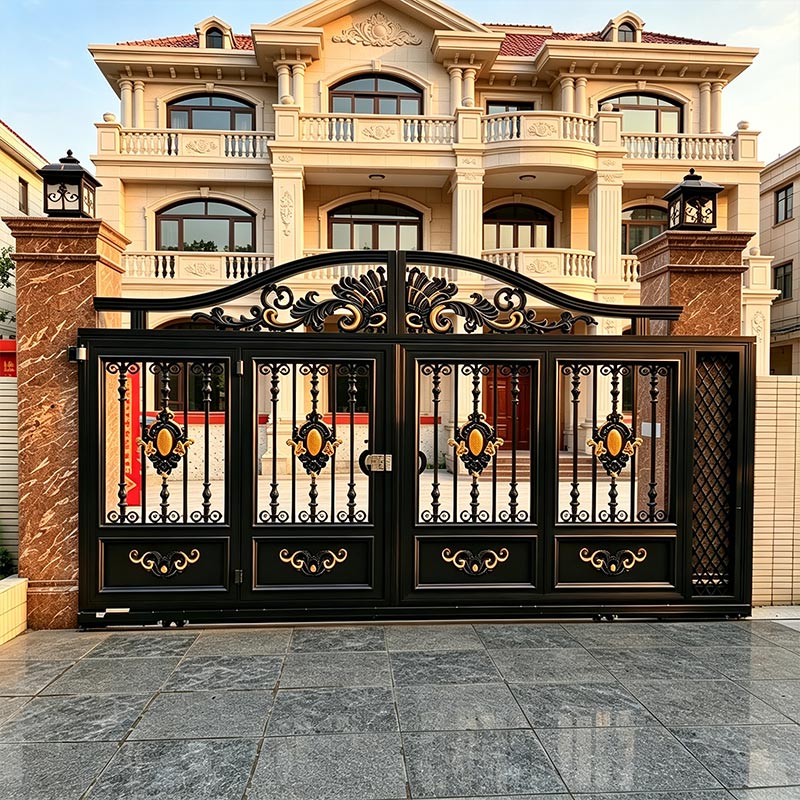
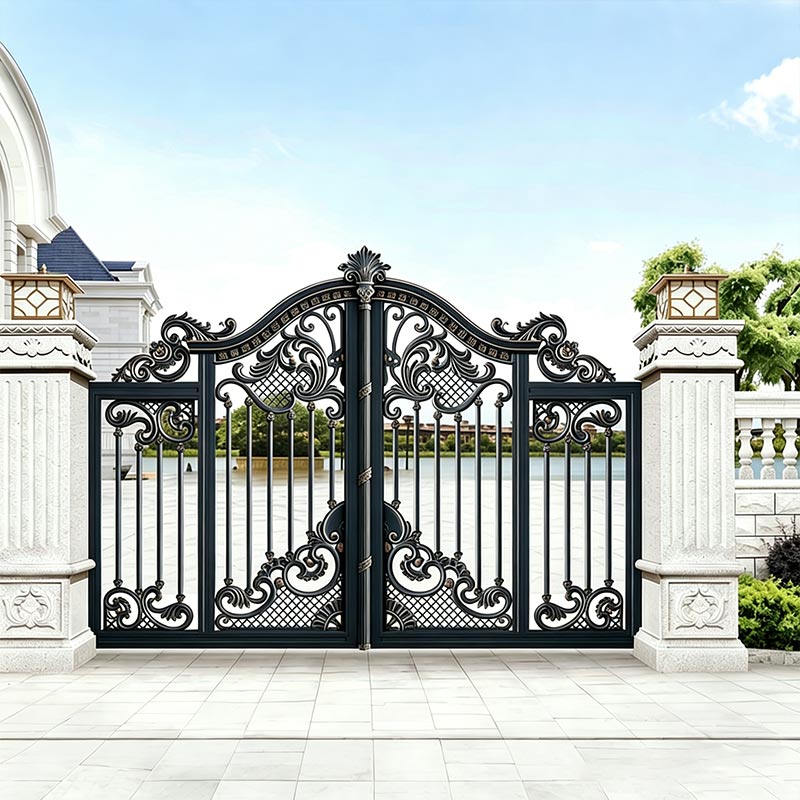
An entrance gate is the first thing visitors see, and for properties where that impression actually matters, the difference between a decorative gate and a forgettable one comes down to craftsmanship and material choice. The JHR Luxury Design Sliding Gate started from a specific problem: classical European gate aesthetics had almost always been done in wrought iron or steel, which meant rust, periodic repainting, and structural weight that eventually stresses the track and foundation. We built this series in 6063-T5 aluminum alloy instead — the proportions and ornamental detail stay; the maintenance burden doesn't. The gate moves on a heavy-duty track system with vibration-dampening rollers. It's quiet in operation. The decorative castings — scrolls, floral motifs, arched tops — are cast aluminum, matched or contrasted in color to the frame. Every gate is manufactured against a specific order, so the dimensions and finish are worked out before anything goes into production. For estates, private villas, and institutional entrances where the gate is part of the architectural statement: this is what JHR builds.
Some driveways don't have the side space a standard sliding gate needs. The gate opens, travels along the wall, and runs out of room before it clears the opening — or the property boundary cuts across exactly where the retracted gate would sit. On paper it looks fine; on site it doesn't work. The JHR Corner Sliding Gate was designed for that specific situation. The gate is divided into articulated panels connected by pivoting joints. When the gate opens, the panels follow a curved stainless steel guide rail and fold around the corner, traveling along the inner boundary wall rather than straight back from the opening. The driveway stays clear; the gate disappears into the corner. The frame is aluminum alloy throughout — rust-proof, lighter than steel, and easier on the motor over its operating life. Finish and panel design are customized to the project. The mechanism handles openings up to 10 meters and can be automated with standard sliding gate motors. It's a specific solution to a specific problem. If your site has that problem, this is how it gets resolved.
The side wall problem comes up constantly on wider driveways. You need a gate that covers a 6- or 8-meter opening, but there's only 2 to 3 meters of clear wall to retract into — not enough for a single-leaf slider, and a swing gate creates a different set of problems with traffic flow. Most of the time, the property owner just accepts a narrower gate than they wanted. That's the gap the JHR Aluminum Overlapping Gate fills. The gate body splits into two or three leaves. When the gate opens, the leaves stack behind one another on a synchronized track system — the same principle as a collapsing telescope — and the whole assembly tucks into a fraction of the space a single panel would need. A 6-meter opening pulls back into roughly 2 to 2.5 meters of side clearance. On sites where that side clearance just doesn't exist in a single run, it makes the difference between a functional entrance and a compromised one. Frame material is 6063-T5 aluminum alloy throughout. It runs lighter than structural steel by around 40%, which matters when you're asking a motor to synchronize multiple moving leaves over years of daily cycling. Rust isn't part of the maintenance conversation — aluminum oxide forms naturally on the surface and the powder coat goes over that. In coastal installations and high-humidity climates, this is the material choice that holds up.
The double swing gate is one of those formats that property owners recognize before they know what to call it — two leaves, central meet point, opens on hinges. It reads as an entrance rather than a barrier, which is part of why it stays the dominant choice for residential villas and estate driveways even as sliding and folding options have multiplied. What JHR changed in this version is the material. Traditional double swing gates — wrought iron, painted steel, timber — share a common maintenance arc: they look good at installation, hold up for a few years, then start showing the cost of the hinge-load and weather exposure at the joints and surfaces. The frame on this gate is 6063-T5 aluminum alloy throughout. It doesn't rust, doesn't warp from UV cycling, and comes in at roughly 40% lighter than a comparable steel structure. On a swing gate specifically, that weight difference has a longer-term consequence than people usually account for up front. Available from 2.0 m to 8.0 m per leaf, in multiple infill styles, ships flat. Manual or motorized.
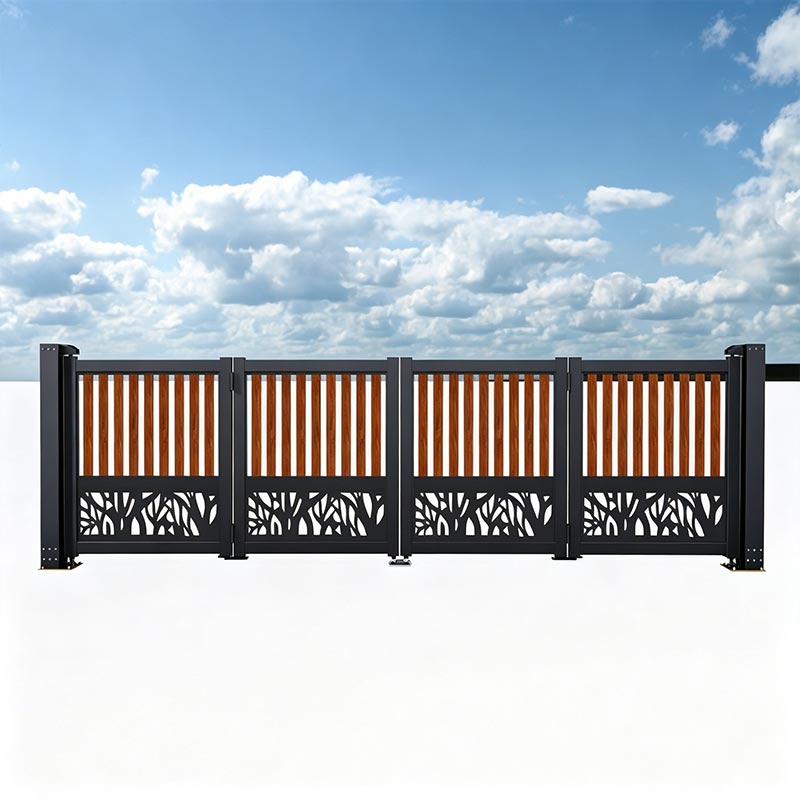
There's a specific site condition that the Bi-folding gate was built for: the driveway where a sliding gate won't fit because the side wall is too short, and a swing gate won't work because the opening faces directly onto a road or shared lane. You've got the opening width you need, but nowhere for the gate to go when it's open — not back along the wall, not out into traffic. The Bi-folding gate folds inward on hinged joints. The panels collapse toward each other and stack in a bundle that takes up roughly a quarter of the opening width. A 4-meter gate opens into about 1 meter of stacked panel on each side. The driveway stays clear, there's no swing zone to worry about, and the structural requirement is two posts and a shallow guide channel — no long track to excavate, no overhead beam. JHR makes this gate in 6063-T5 aluminum alloy, extruded profiles throughout. Same grade used in architectural curtain wall and window systems — dimensionally stable, rust-proof, and light enough that the whole panel can be shipped flat in standard export cartons. On international projects, that packing format cuts freight cost noticeably versus welded steel frames, which need custom crating and still arrive with transit damage more often than you'd want. Widths from 2.4 m to 10.0 m. Full RAL color range. Compatible with dedicated Bi-folding gate drive systems and standard access control hardware.
Crafted from aerospace-grade aluminum with premium long-lasting finishes, the JHR Luxury Design Gate features sleek concealed hardware, adjustable privacy slats, ultra-quiet smooth operation and smart home compatibility, serving as a sophisticated architectural statement for high-end villas and premium commercial properties.
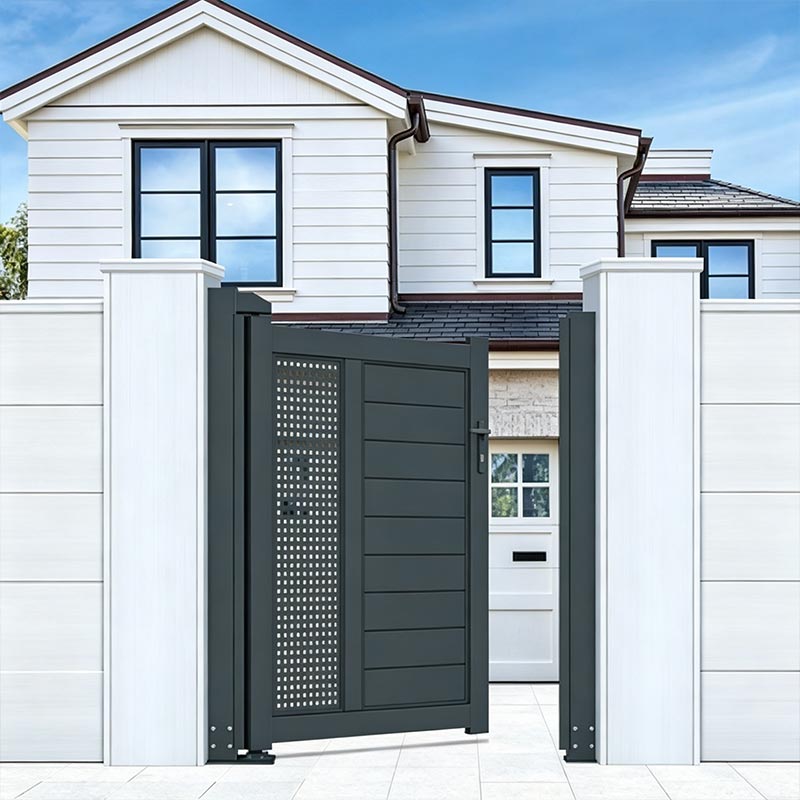
JHR Pedestrian Gate is made of corrosion-resistant aluminum with a matching finish, available in standard widths for smooth single-swing use, supports multiple lock and automated safety systems, and blends perfectly with main gate setups for secure, convenient pedestrian access in residential and commercial settings.
Industrial entrance gates fail in specific, predictable ways. The ground track fills with compacted debris — mud, gravel chips, forklift rubber — and the rollers start binding. The motor compensates by drawing more current. Nobody notices until the circuit breaker trips during a shift change, or the gate stalls halfway open with a truck waiting. At that point, the conversation about "low maintenance" that happened during procurement sounds different. The JHR Industrial Heavy Duty Cantilever Gate removes the ground track from the system entirely. The gate suspends from an overhead carriage bolted to a reinforced post on one side of the opening. Nothing crosses the driveway at ground level. Debris, standing water, heavy vehicle crossings — none of it touches the operating mechanism. The gate just slides. Clear spans up to 16 meters, no center post, no ground prep beyond the foundation on the motor side. The frame is 6063-T5 aluminum alloy — comparable tensile strength to mild structural steel, 35 to 40 percent of the weight. Motor sits either exposed on an external bracket for easy site access, or housed inside the post for protected installations. Both configurations run the same control interfaces: RF remote, RFID, keypad, loop detector, BMS integration. In case power failure,the gate can also be manual controlled. Currently running in manufacturing plants, logistics centers, and government facilities. That's the application background for why the design is what it is.
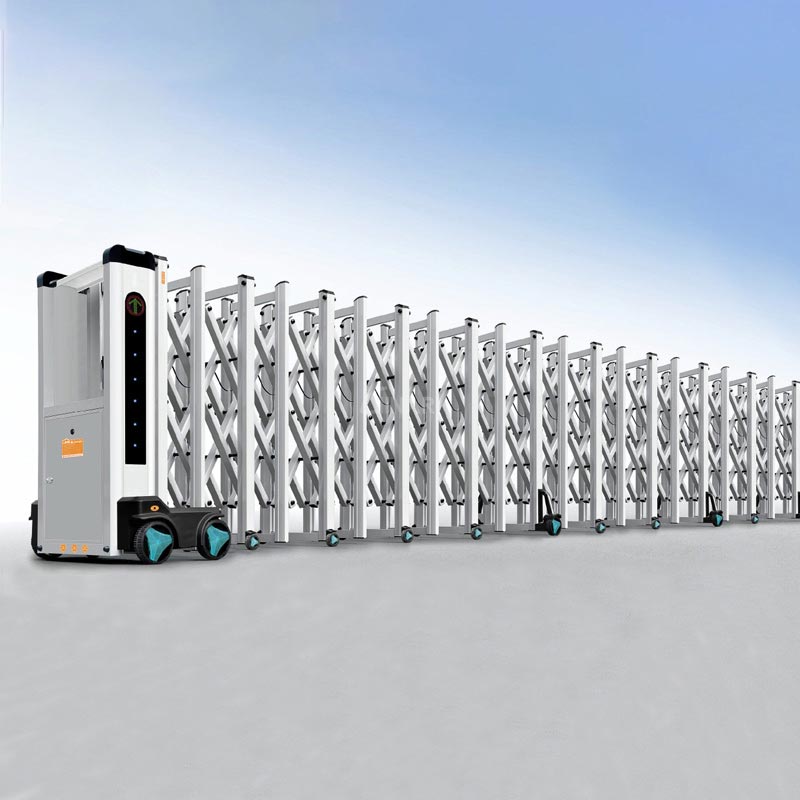
Most gate types are constrained by the same variable: where does the gate go when it's open. A slider needs side wall. A cantilever needs a post and counterbalance zone. A swing gate needs a clear arc. On wide industrial openings — a stadium vehicle gate, a logistics yard entrance, a school campus perimeter — that side space often doesn't exist in a usable form, or the opening is wide enough that no standard gate leaf can cover it without a center post breaking up the clear span. The accordion structure of the JHR Industrial Retractable Gate sidesteps this. The gate extends across the opening in linked panels; when it opens, those panels compress into a stack at one side. A 20-meter gate pulls back into under 3 meters. At 40 meters — the maximum in this range — the retracted footprint is still a fraction of what any other gate type would need for the same span. Frame material is either 6063-T5 aluminum alloy or 304 stainless steel, depending on what the operating environment actually demands. Same caster and track hardware across both. Manual push or electric drive; full range of access control options on the motorized versions. JHR retractable gates are running in manufacturing plants, logistics warehouses, school campuses, stadiums, and government facilities. Those aren't aspirational applications — they're where the current installed base sits.
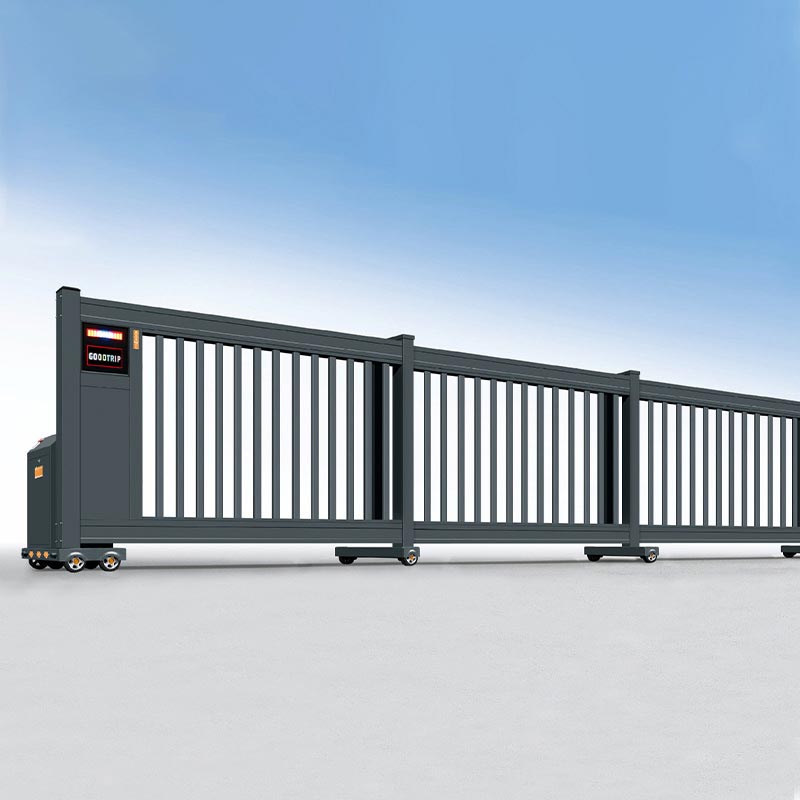
The side clearance problem on wide industrial entrances comes up in a specific way. The project spec calls for a 16- or 25-meter clear opening — wide enough for two trucks side by side, or for oversized equipment access. The structural engineer signs off. Then someone measures the wall space available for the gate to retract into, and the number is half of what a single-panel slider would need. The opening is possible; the gate that serves it doesn't fit. The JHR Industrial Telescopic Sliding Gate handles this by splitting the panel into two to five sections running on parallel ground tracks. When the gate opens, the sections slide back simultaneously, stacking behind the lead panel at the motor post. A 25-meter opening that would demand 20 meters of unobstructed wall for a single-panel gate needs roughly 8 to 10 meters in a three-section configuration. That's not a marginal improvement — it's the difference between a gate that fits the site and one that doesn't. Frame throughout is reinforced 6063-T5 aluminum alloy. Electric drive is standard, with soft-start and soft-stop on the motor. Full control interface options: RF remote, RFID, keypad, loop detector, BMS integration via RS485. Standard spans from 6 m to 25 m; heights from 1.5 m to 3.0 m. Custom dimensions on engineering review. Currently deployed in manufacturing plants, logistics distribution centers, commercial perimeter security, and public facility access control. That's where the product has been tested against actual industrial duty cycles, not where it's intended to go.
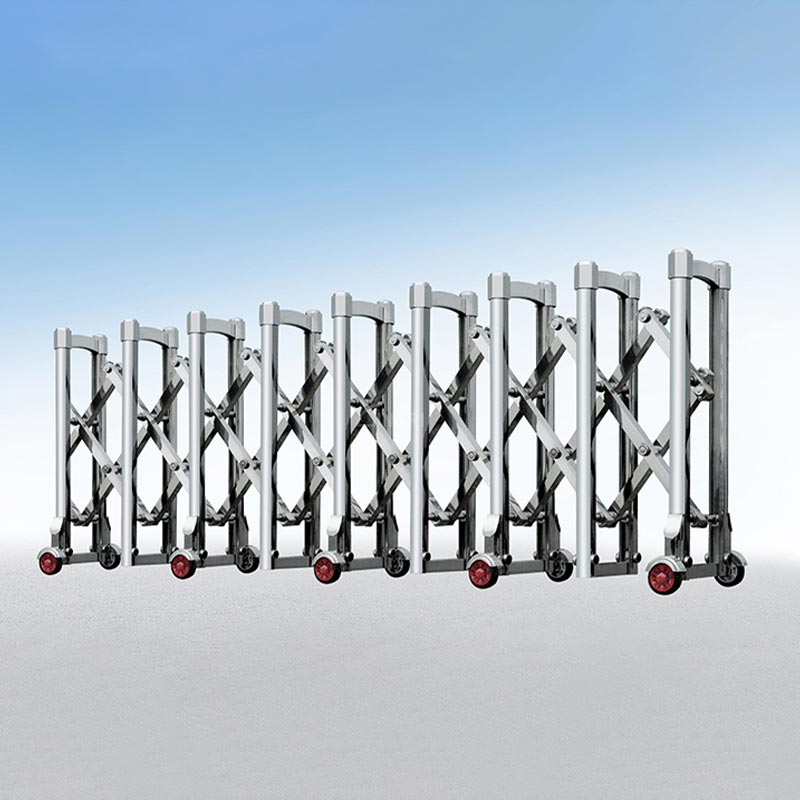
The problem with most crowd control barriers isn't that they don't work — it's that they fight you on everything surrounding the actual deployment. Concrete ballast blocks take a forklift to move and somewhere meaningful to store. Steel panel systems need a van and a crew even for a modest run. Plastic barriers are light enough but they look like what they are, and after a season of outdoor use they start to look worse. The JHR Manual Retractable Barricade is an accordion-folding metal barrier that one person can push into position, expand to the required width, lock in place with the foot brake, and link to the next unit. Each unit covers 2 to 10 meters in its deployed position and retracts to a stack roughly 30 to 50 centimeters wide for transport and storage. Ten units covering a 100-meter perimeter fit in approximately 3 to 5 square meters of floor space standing vertically — the kind of footprint that fits in a utility corridor, not a dedicated equipment yard. Frame is either 6063-T5 aluminum alloy or 304 stainless steel. Same folding mechanism, same brake casters, same connection hooks. The material choice changes the weight and surface properties; the operation doesn't change.
Most fence decisions don't start with material — they start with the problem the previous fence caused. The timber one warped along the bottom rail after two wet seasons and needed repainting before it had been up five years. The steel one looked fine until the cut edges at the post holes started bleeding rust onto the concrete. The concrete block wall is solid, but every landscaper who looks at it mentions that it's a lot of visual weight for a residential boundary. The JHR Aluminum Fence is made from 6063-T5 aluminum alloy profiles, powder-coated in any RAL color over a chromate conversion primer. It doesn't rust. It doesn't warp. It doesn't need painting, staining, or any surface treatment after installation. In climates that are hard on outdoor materials — coastal, high-UV, high-humidity — the performance gap between aluminum and the alternatives becomes visible within a few years. On a fifteen-year ownership horizon, the maintenance cost difference is not subtle. Panels are available in horizontal slat, vertical picket, and full privacy board styles. Height, slat spacing, and post spacing are all specified at order. Assembly is clip-and-bolt to standard aluminum posts — no welding, no specialist tools, no concrete formwork beyond the post footings.
Every fixed outdoor structure makes a permanent decision about light and airflow. A solid roof solves the rain problem and the sun problem, but it also solves the fresh-air problem and the open-sky problem — permanently, in all weather. An open lattice pergola provides partial shade at certain sun angles and zero rain protection. Neither one adapts to what the space actually needs at a given moment. The JHR Motorized Louvered Aluminum Pergola has a roof that rotates. The blades sit on pivot axes driven by a quiet tubular motor — 0 degrees puts the blades edge-on to the sky for full light and maximum ventilation; 135 degrees overlaps the blades and the roof is watertight, with rain draining to integrated gutter channels in the perimeter beams. Any position between those two handles a different combination of shade, light, and airflow. The adjustment takes a few seconds from a wall switch, a remote handset, or a smartphone app. The entire structure is 6063-T5 aluminum alloy — columns, beams, and louver blades — powder-coated in any RAL color. Column spacing, roof span, and height are specified per project. Accessories include integrated LED lighting, motorized side screens, rain sensors for automatic louver closure, and smart home integration through Tuya, Alexa, and Google Home. Standard modular widths from 3.0 m to 8.0 m; depths from 2.5 m to 6.0 m; column heights from 2.4 m to 3.5 m.
The problem with most crowd control barriers isn't that they don't work — it's that they fight you on everything surrounding the actual deployment. Concrete ballast blocks take a forklift to move and somewhere meaningful to store. Steel panel systems need a van and a crew even for a modest run. Plastic barriers are light enough but they look like what they are, and after a season of outdoor use they start to look worse. The JHR Manual Retractable Barricade is an accordion-folding metal barrier that one person can push into position, expand to the required width, lock in place with the foot brake, and link to the next unit. Each unit covers 2 to 10 meters in its deployed position and retracts to a stack roughly 30 to 50 centimeters wide for transport and storage. Ten units covering a 100-meter perimeter fit in approximately 3 to 5 square meters of floor space standing vertically — the kind of footprint that fits in a utility corridor, not a dedicated equipment yard. Frame is either 6063-T5 aluminum alloy or 304 stainless steel. Same folding mechanism, same brake casters, same connection hooks. The material choice changes the weight and surface properties; the operation doesn't change.
The problem with a terrace or a shopfront that faces the wrong direction isn't that it's unusable — it's that it's unusable at exactly the hours when it should be most useful. The mid-morning sun that turns a patio table into a heat trap. The afternoon rainstorm that empties a restaurant terrace in ninety seconds. Both problems have the same practical cost: space that should be generating revenue or enjoyment isn't. A glass canopy solves the rain problem but traps heat and costs a construction project to install. A parasol covers one table in no wind. The JHR Aluminum Awning covers the space properly — 1.5 m to 6.0 m of projection, 1.0 m to 12.0 m wide, retractable when the weather is good and extended when it isn't. The frame is 6063-T5 aluminum alloy — the same material decision that drives everything else in the JHR outdoor product range. It doesn't rust, doesn't need repainting, handles salt air and high-humidity conditions without structural degradation. The canopy fabric is solution-dyed acrylic or high-density polyester outdoor textile, waterproof-coated on the reverse, UV-resistant through the fiber rather than a surface treatment. Both materials do their job without maintenance intervention for years at a stretch. Retractable models fold back against the wall on a motorized or manual roller. Fixed models provide permanent coverage at a lower hardware cost. Both configurations ship with a hardware kit and installation drawings for straightforward on-site assembly by any construction team.
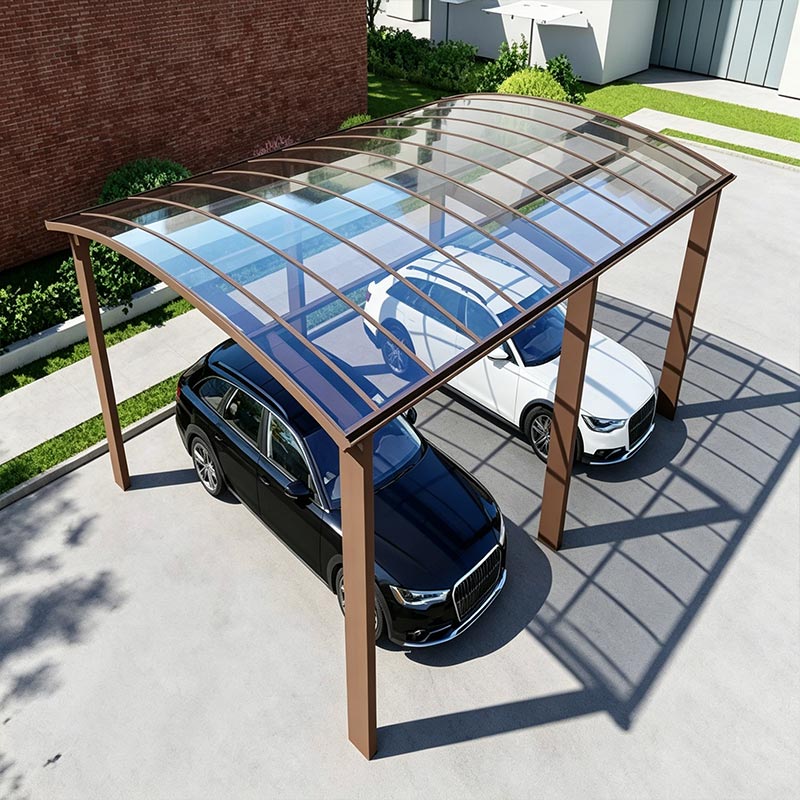
Most people don't think seriously about a carport until something happens to the car. The paint on the roof starts going chalky after three summers of direct UV. The rubber around the windscreen gets brittle and starts to lift at the corners. Door seals that were perfectly fine at purchase start leaking around year four. None of it is dramatic damage — it's the slow kind, which is why it goes unnoticed until the car is being traded in and the depreciation shows up in the offered price. A full garage is the complete answer, but it's a building project: planning permission, a foundation pour, a construction crew, and a cost that rarely makes sense for a second vehicle or a parking bay that didn't come with the property. A carport sits between those two options and handles the actual problem — UV, heat, and rain — at a fraction of the cost and without any of the planning complexity. The JHR Aluminum Carport is built on a 6063-T5 aluminum alloy frame with cast acrylic roof panels. The frame doesn't rust — not at the column bases, not at the bolt joints, not after ten years of rain sitting on every horizontal surface. The cast acrylic panels let daylight through while blocking up to 99% of UV, so vehicles parked underneath stay in natural light rather than in a dark covered space, and the UV that degrades paint and rubber doesn't reach them. The structure assembles from pre-cut, pre-drilled profiles using standard hand tools — no welding, no specialist equipment, no concrete formwork beyond the column footings. Single-bay, double-bay, and multi-bay configurations. Custom bay width, depth, and column height. Any RAL color on the frame. Integrated perimeter gutters and concealed downpipes handle rain without surface-mounted pipework.
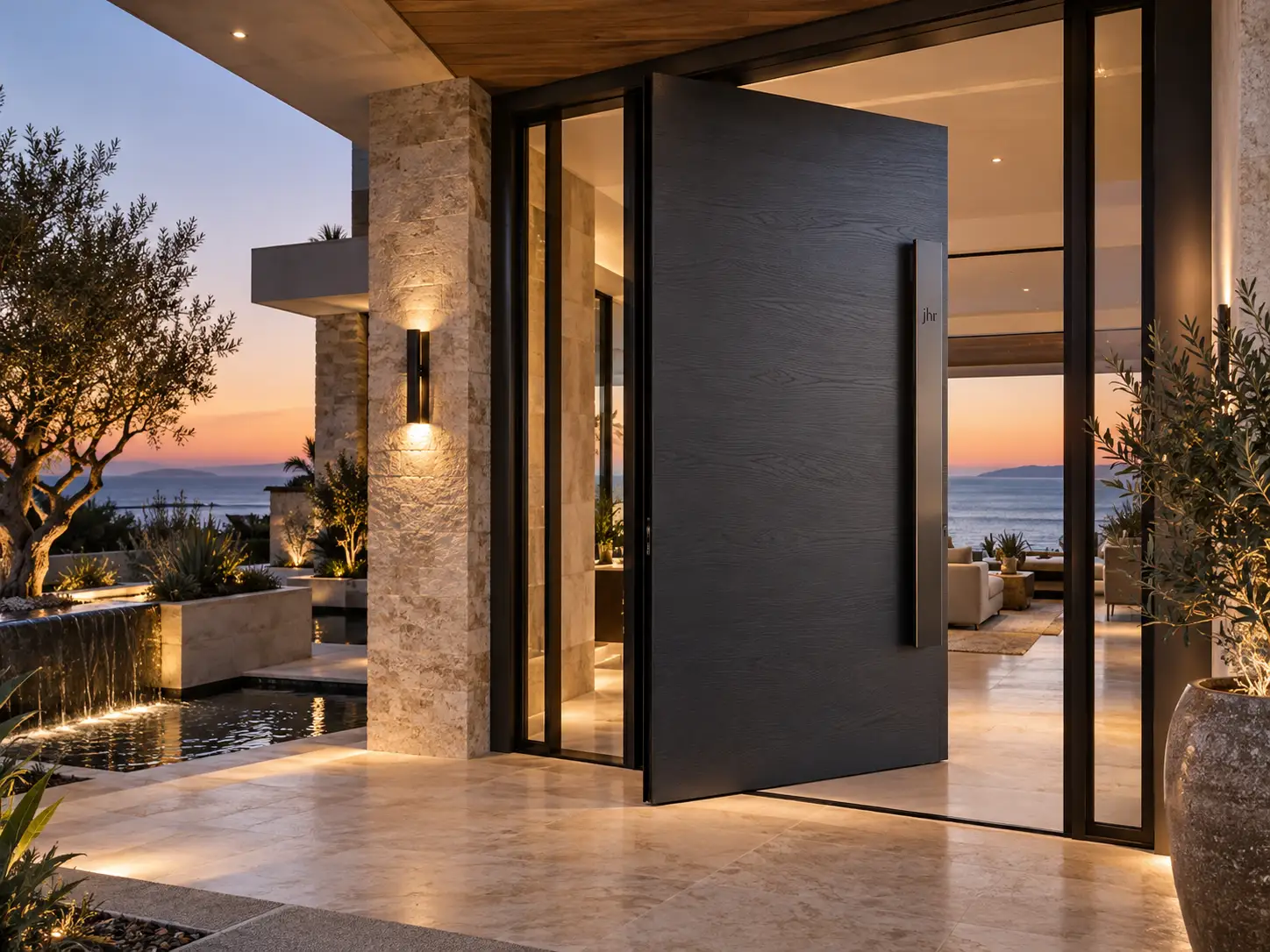
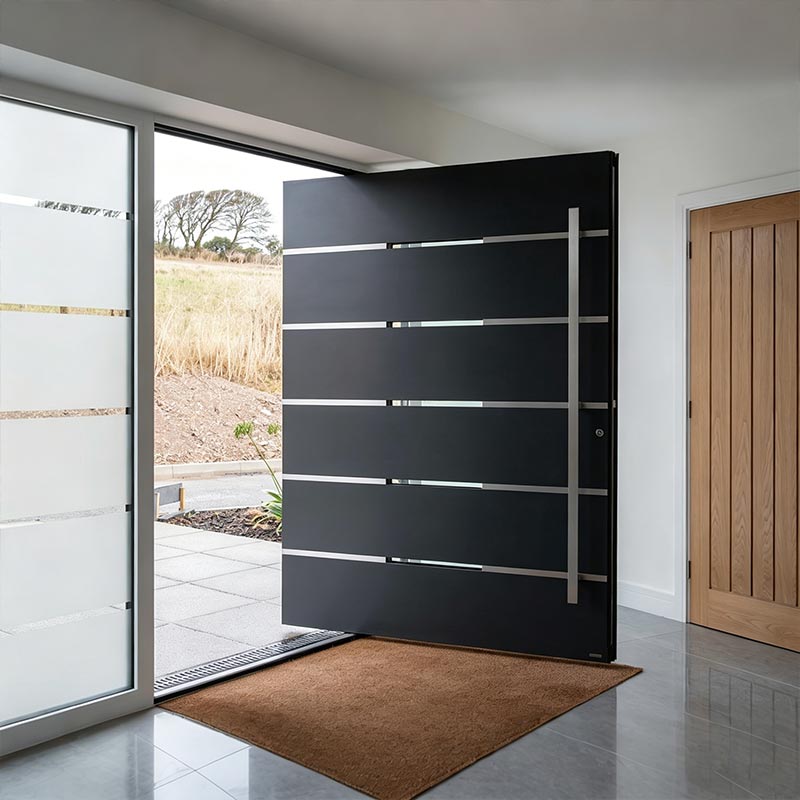
There is a size threshold where a conventional hinged door stops working — not conceptually, but mechanically. Side-mounted hinges carry the panel weight in shear, which means the larger and heavier the panel gets, the more the hinge pins deflect under load, and the more the bottom edge of the door drops over time. A 1.2-meter-wide, 3-meter-tall panel on standard hinges is an alignment problem waiting to happen. It binds in the frame, the latch stops reaching center, and the gap at the top corner opens up while the gap at the bottom pinches. The pivot mechanism transfers load differently. The top pivot carries the panel weight vertically through a bearing in the head frame; the floor pivot provides the rotation axis and handles lateral stability. Because the load path is vertical compression rather than shear at the hinge edge, the mechanism carries panel weights and dimensions that would be structurally unrealistic on a conventional system. A 1.5-meter-wide, 3.5-meter-tall aluminum panel — within the standard JHR range — operates with the same smooth, balanced feel as a much smaller door. The frame is thermally broken 6063-T5 aluminum alloy throughout: inner and outer profiles separated by a continuous polyamide insert, reducing frame heat transfer by up to 70% versus a standard aluminum section. Multi-point locking, multi-layer EPDM gaskets on all four edges, concealed threshold drainage. Panel width up to 1.5 m per leaf, height up to 3.5 m. Custom sizes, any RAL color, solid or glazed infill panels, motorized operation available.
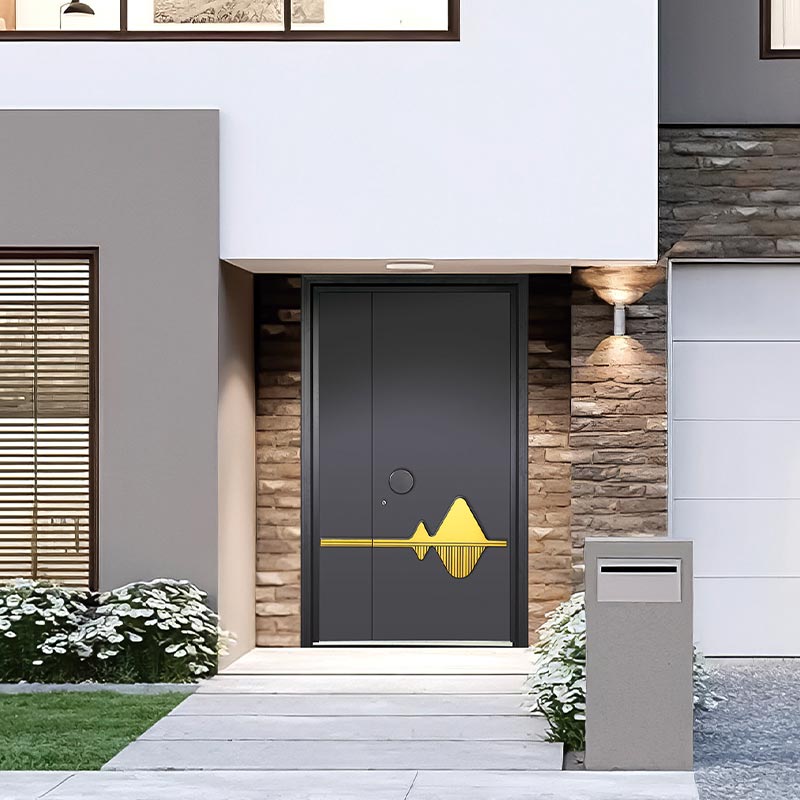
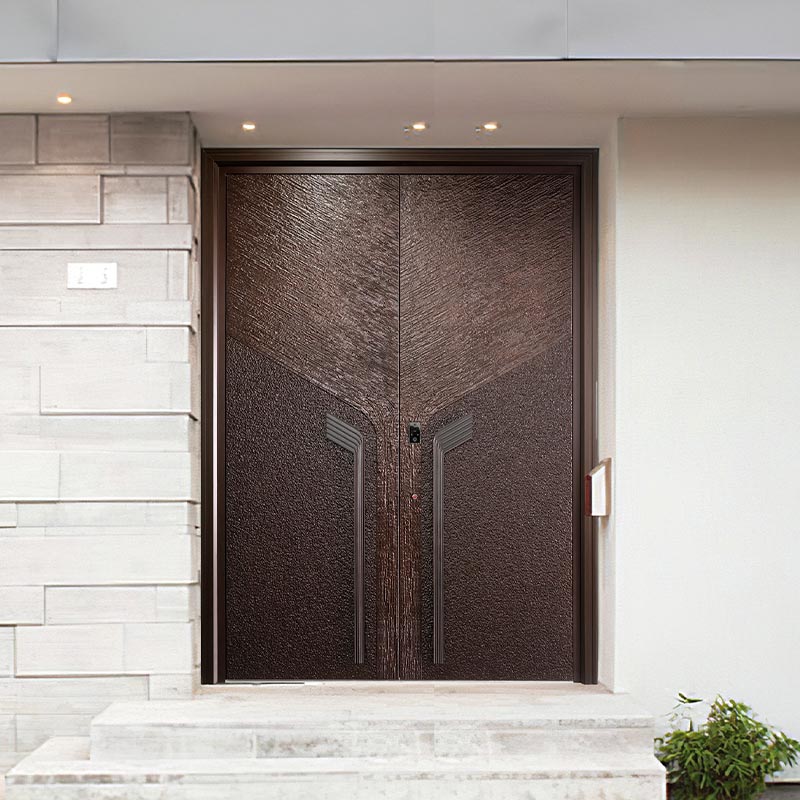
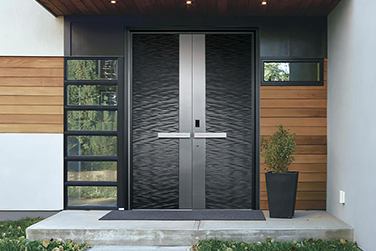
JHR's cast aluminum entry door delivers three-dimensional panel relief, thermally broken frame construction, multi-point locking, and full weatherproofing — custom sizes, RAL colors, and wood-grain finishes for luxury villas and high-end residential entrances. Zero rust, zero maintenance.
Walk up to a villa entrance and you form an opinion in the first few seconds — before you ring the bell, before you step inside. The front door carries a disproportionate amount of that impression. Timber doors look right for a season or two, then the joints swell, the surface finish chalks, the bottom rail starts to absorb moisture. Steel security doors hold up structurally but they're cold visually and they rust at the welds and cut edges in ways that the surface coating hides until it doesn't. The JHR Cast Aluminum Entry Door starts from a different material decision. The panel is produced by pouring molten aluminum into a purpose-machined mold — not extruded and cut, not pressed from flat sheet, but cast. The result is a panel with genuine three-dimensional relief: deep recesses, raised borders, carved ornamental detail that carries the visual weight of bronze or wrought iron without the corrosion, the structural weight, or the maintenance schedule those materials bring with them. The frame is thermally broken 6063-T5 aluminum alloy — inner and outer profiles separated by a continuous polyamide insert that cuts frame heat transfer by up to 70% versus a standard aluminum section. Multi-point locking, multi-layer EPDM perimeter gaskets, concealed threshold drainage. Powder coat or wood-grain transfer finish, both rated for fifteen-plus years of exterior exposure. Made to order in any size up to 1.2 m per leaf width and 3.0 m height, single or double leaf.
JHR's cast aluminum entry door delivers three-dimensional panel relief, thermally broken frame construction, multi-point locking, and full weatherproofing — custom sizes, RAL colors, and wood-grain finishes for luxury villas and high-end residential entrances. Zero rust, zero maintenance.

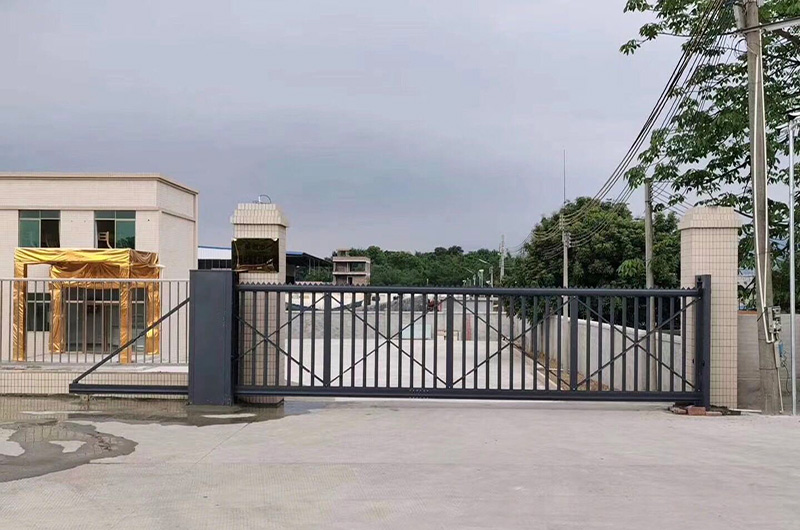
Residential Entrance Solutions Premium Aluminum Fencing & Gates for Modern Homes
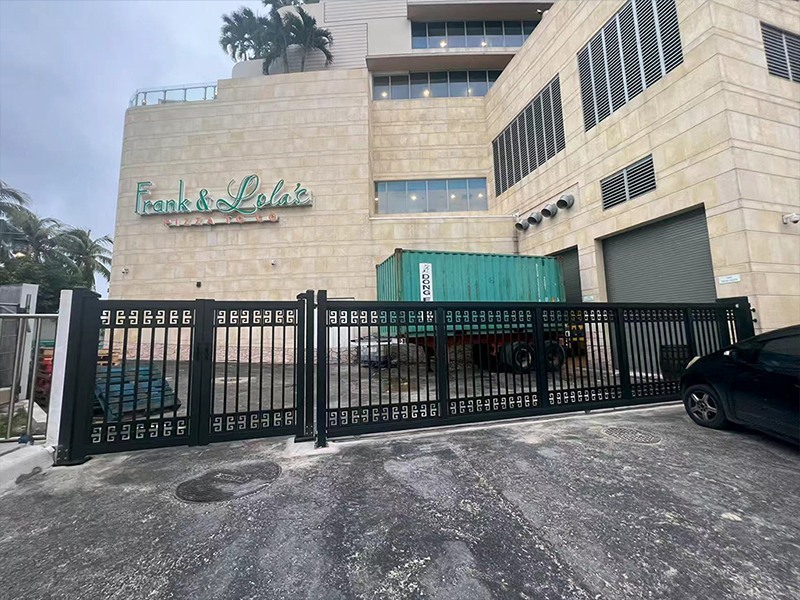
Transform commercial spaces with high-end aluminum security
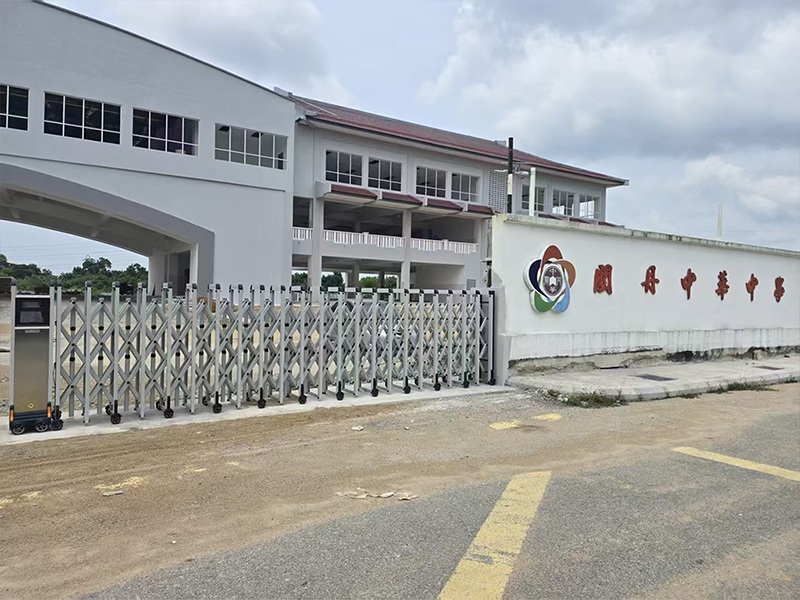
Elevate industrial credibility with high-performance aluminum security
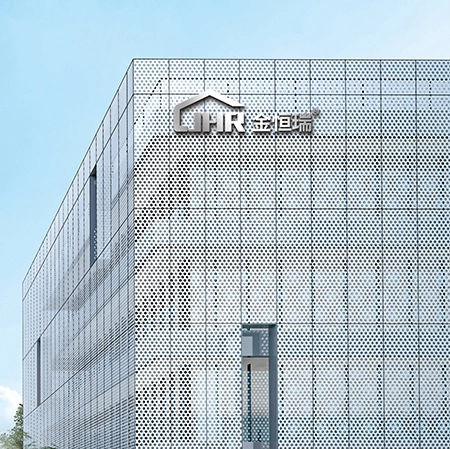
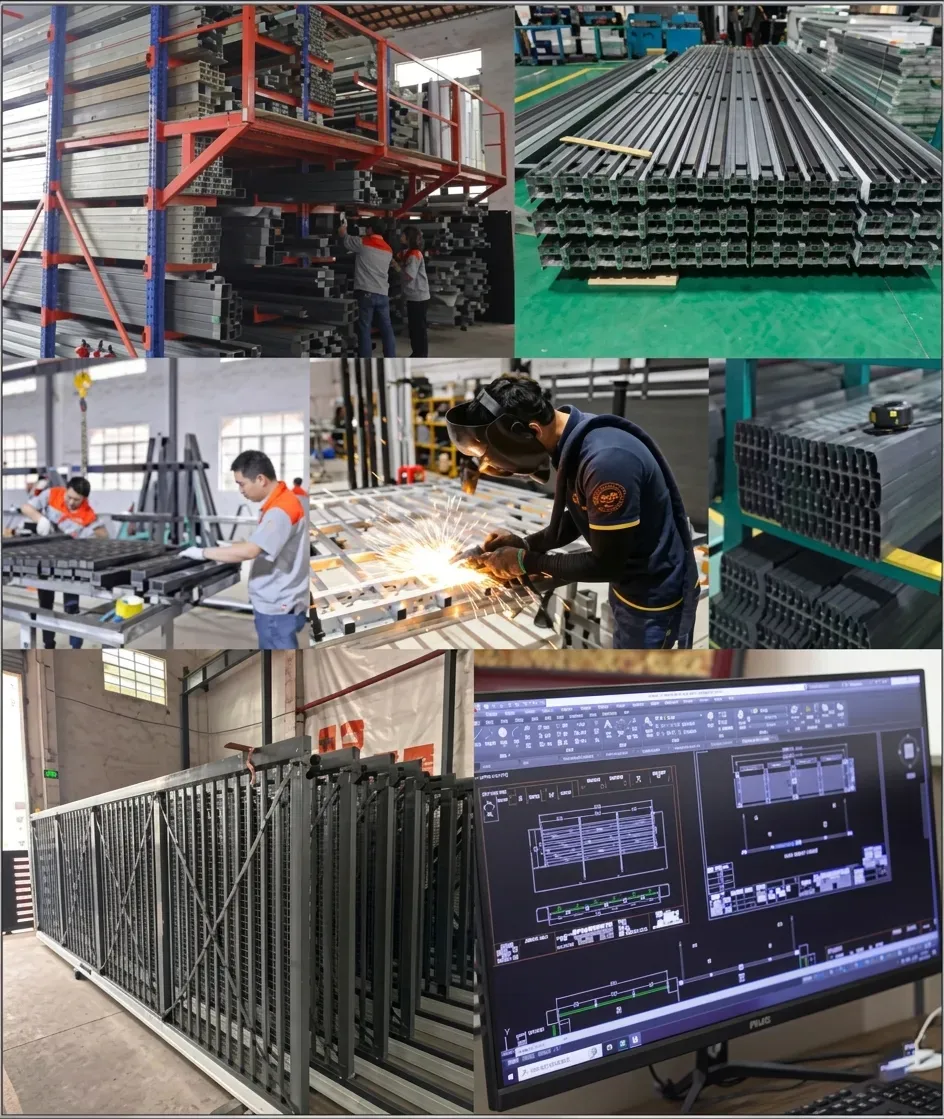

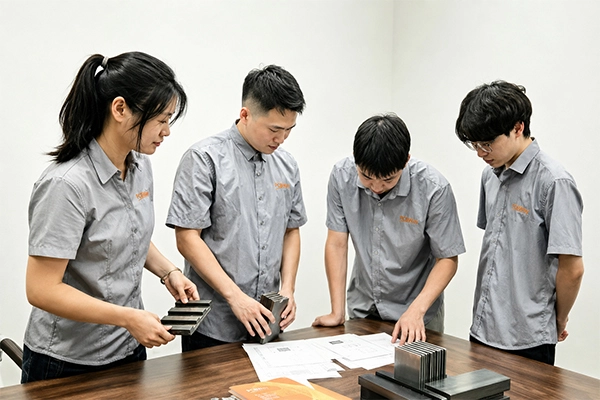
Specializing in custom garden products, with over 10 years of experience, we offer high-quality gates, fences, pergolas, carports, along with expert consultation, project drawing, custom production, installation guidance, and after-sales services. We adhere to the principle of “Customer First, Service Foremost ” , highly valuing customer feedback, and striving for excellence. Our commitment to innovation, quality, and exceptional service sets us apart.
Factory Years
Workers
Annual Outputs
Export Business
Inventory Assets